

Shilpa
shilpa - craft, skilled making
GenAI for CAD automation and manufacturing engineering.
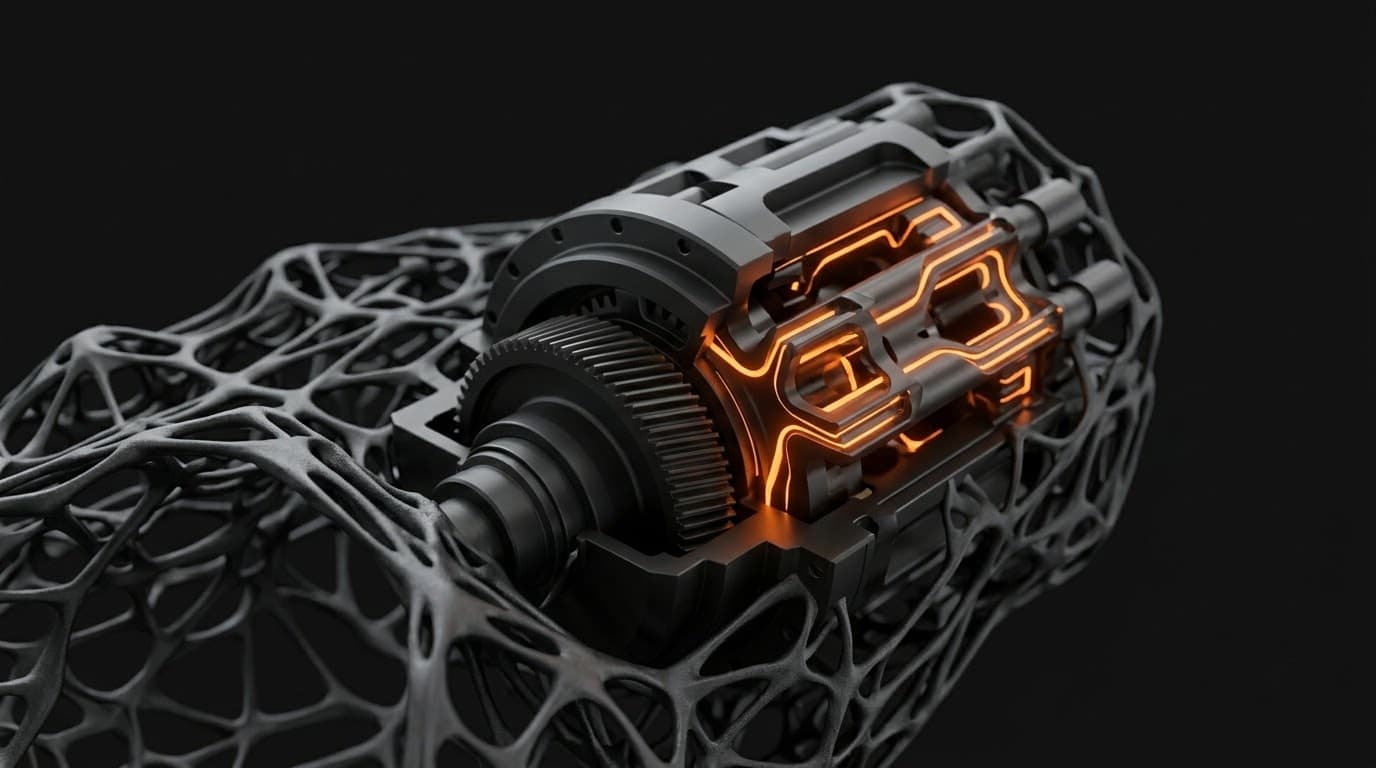
Shilpa applies generative AI to the repetitive core of engineering work – CAD automation and manufacturing design. It generates and modifies designs from intent, checks manufacturability early, and captures hard-won engineering know-how as reusable assets, so teams spend their time on the hard problems rather than the routine ones.
Workflow
Problem
Engineering teams spend disproportionate time on repetitive CAD and design tasks.
Outcome
Generative AI that accelerates CAD automation and manufacturing engineering workflows.
01
Describe intent
Engineers express what they need; the system proposes CAD.
02
Generate & modify
Designs are created and adapted automatically.
03
Validate
Manufacturability and constraints are checked early.
04
Capture knowledge
Decisions become reusable assets for the next design.
Modules
CAD Automation
Generate and modify designs from intent.
Design Validation
Check manufacturability and constraints early.
Knowledge Capture
Encode engineering know-how into reusable assets.
Representative use cases
Generating Sheet-Metal Bracket Variants Under Manufacturing Constraints
An automotive tier-1 supplier produces several hundred bracket variants a year, most of them minor adaptations of an existing design to a new mounting position.
Capturing Retiring Engineers' Design Rules as Reusable Assets
A heavy machinery manufacturer faces a wave of retirements among the engineers who hold three decades of undocumented design judgement.
Early Manufacturability Feedback on Cast Housing Designs
A pump manufacturer designs cast housings whose manufacturability problems - draft angles, wall thickness transitions, core support - surface only when the foundry quotes.
Accelerating Change Propagation Across a Product Family
An industrial equipment maker changes a shared interface dimension and must propagate that change across forty derivative designs built on it.
Standing Up Design Automation Inside an Existing CATIA and PLM Stack
An aerospace supplier wants design automation but cannot move off its established CATIA and Teamcenter environment, where certification evidence lives.
Evidence
What Wayam can show for this entry
Curated solution design with an owner and a review date. No performance or production claim.
Allowed claims at this tier: Possible workflow, typical stack, prerequisites.
- Evidence tier
- T4 · Reference pattern
- Integration status
- Typical enterprise system
- Metric status
- Scenario only
- Evidence owner
- Not yet attached
- Validated
- Not yet attached
- Valid until
- —
- Content version
- 2026.09

Pending evidence attachment
This entry represents an enterprise architectural reference pattern. Customer benchmarks, run replays, and metric verifications are established during technical discovery.
Limitations
- Headline metrics are representative until a customer result is attached.
Representative metrics · Reference · scenario only
GenAI
for CAD & manufacturing
These describe the intended outcome of the design. They are not measured customer results until a validated case is attached above.
Architecture & controls
Composed across the operating loop
Ingest
Connect the systems of record and read the signals the work already produces.
Covered by the platform
Reason
Ground context, score options against policy and the stated goal, draft the next step.
8 agent roles
Act
Execute an approved step in the system of record and keep the evidence.
1 agent role
Govern
Set policy, gate consequential actions on a named approver, and audit what ran.
1 agent role
Pack Architecture & Agent Composition Graph
10 Composed Agents- AGT-0237
CI/CD Build Failure Diagnosis Agent
Software Engineering
- AGT-0250
Code Completion Agent
Software Engineering
- AGT-0251
Code Review Agent
Software Engineering
- AGT-0383
Defect Root Cause Analysis Agent
Quality
- AGT-0366
Engineering Change Order Agent
R and D
- AGT-0370
Test Plan Generation Agent
R and D
- AGT-0371
Requirements Decomposition Agent
R and D
- AGT-0376
CAD Drawing Markup Agent
R and D
Control gates
- A named approver on every consequential write-back
- Evidence and audit trail kept with every run
Capability atoms
- generative-design
- system-connectors
- root-cause-reasoning
- human-approval
Typical enterprise systems
Typical stack for solution design; compatibility is validated during discovery.
- ServiceNow ITSM
- Datadog
- PagerDuty
- Kubernetes
- GitHub
- Cursor
- Anthropic Claude Code
- Cognex VisionPro
Designed for
manufacturing, automotive
Business case
Model a Shilpa scenario with your own baseline
Three scenarios from the numbers you enter. Capacity released is time; it becomes a saving only when roles or costs are actually removed or avoided.
| Scenario | Improvement | Capacity released | Cashable savings | Net annual | Payback |
|---|---|---|---|---|---|
| Conservative | 9% | — | — | — | — |
| Expected | 18% | — | — | — | — |
| Upside | 24% | — | — | — | — |
Enter an annual volume and a baseline cost to see figures.
Illustrative planning scenario, not a guarantee. Results depend on process baseline, adoption, data quality, integration scope, controls, and deployment costs.
Pilot this
From solution design to a bounded pilot
Step 1 · 3–4 weeks
Discovery Sprint
Validate the workflow, data, controls, baseline and business case before anything is built.
Gate: Blueprint and pilot plan signed by the business owner, technical owner and Wayam.
Step 2 · 6–10 weeks
Bounded Pilot
Prove quality and value on agreed data against agreed acceptance tests.
Gate: Acceptance thresholds met on the evaluation set; go/no-go decision recorded.
 Agrani · evidence pending5 Agrani candidates in this solution: Defect Root Cause Analysis Agent, Engineering Change Order Agent, Test Plan Generation Agent, Requirements Decomposition Agent, CAD Drawing Markup Agent
Pairs well with